By Stretch Wrapper | 09 January 2026 | 0 Comments
How to Choose the Roller conveyors?
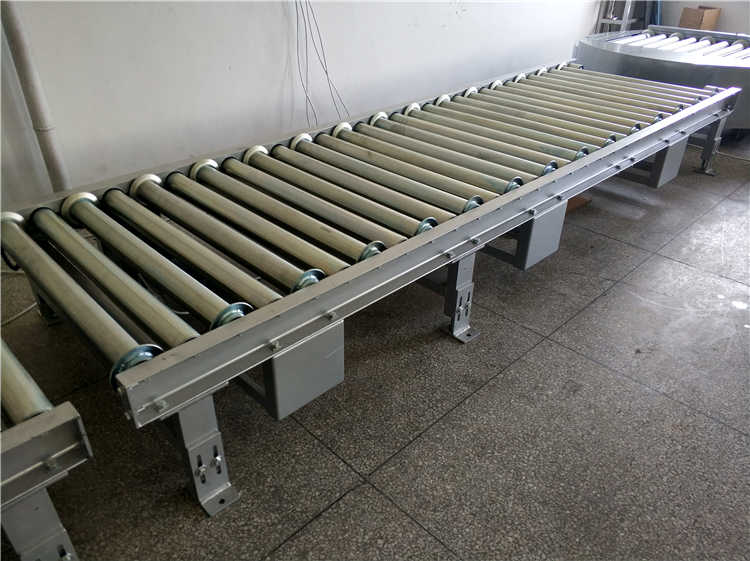 Roller conveyors are a very common type of conveying equipment. They can be used independently to improve production efficiency, or they can be used in conjunction with automated packaging equipment, such as strapping machines, wrapping machines, and heat shrink packaging machines, to achieve mechanized operation of the entire packaging production line and support automation upgrades.
For example, in a small printing plant, without roller conveyors, the printing presses, strapping machines, packaging machines, and pallet wrapping machines all operate independently, requiring a large number of personnel to handle the transfer and unloading of products between workstations. The addition of a conveyor avoids the inefficiencies and poor timeliness caused by long-distance, high-frequency transfers. By integrating PLCs and photoelectric sensors, the entire production line can be automated, reducing the number of operators.
What issues Should we Consider when selecting a Roller conveyor?
Typically, when used in conjunction with various packaging equipment, manufacturers will provide unified control to ensure the smooth operation of the entire production line. However, users who purchase conveyor lines separately may not be able to adequately address some common issues. Below, Emanpack will share some common factors about roller conveyor lines based on our past experience.
Variable Frequency Speed Control Range
Most roller conveyor users request variable frequency speed control. Speed control simply means adjusting the speed. Many users mistakenly believe it can be adjusted to any speed, but in reality, there is a range, depending on the maximum speed selected. Typically, the normal speed of a conveyor line is 15 meters per minute, and the speed range is generally adjustable between 5 and 15 meters per minute.
Roller Density
Higher roller density generally means greater load-bearing capacity. Generally, for rollers of the same specifications, higher density means greater load-bearing capacity. However, manufacturers usually determine the optimal roller spacing based on the size and weight of the user's products, thus selecting matching roller diameters and shaft diameters to achieve the highest cost-effectiveness. This is not simply a matter of denser rollers.
Roller Material Selection
Stainless steel rollers are not the best choice. Many users prefer stainless steel rollers, believing they are more robust and have better load-bearing capacity. In terms of load-bearing capacity alone, stainless steel rollers and carbon steel rollers both are actually the same, but carbon steel rollers have a textured surface, resulting in greater friction when conveying items, a feature that stainless steel rollers lack.
Conclusion
When selecting the roller conveyor, do not make a judgment based solely on personal subjective assumptions. It is best to communicate with the manufacturer to ensure that you purchase the most cost-effective product. The most suitable solution is tailored to your specific needs and matches your existing products and equipment.Leave a Reply
Your email address will not be published.Required fields are marked. *