Automatic inline pallet inverter machine FZ-PO

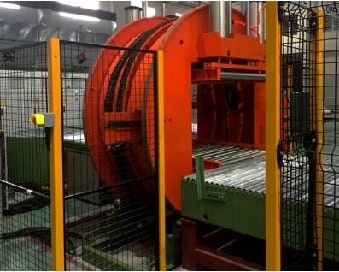
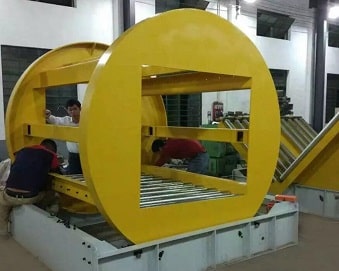
The pass through type inline pallet inverter machine, an automatic pallet turning and changing line with a drum shape turn body and large chamber to contain large and heavy cargo on pallet and skid.
  • Standard machine: No
  • Applicable for: Pallet cargo, skid, paper pile
  • Description
    Consisted of roller conveyors and drum shape turn body, the FZ-PO is a conveyorized pallet turning and changing machinery to connect with customer's assembling/production line or packing line. A turnkey solution for pallet changing and removal.
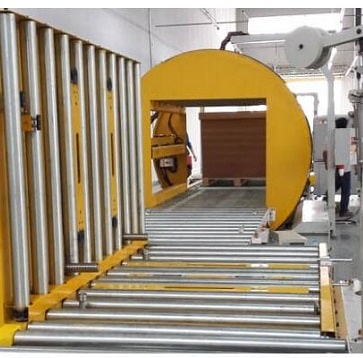
    inline pallet inverter pallet changing line-min
    180 degree turn over, top press platen to press the cargo inside the chamber.
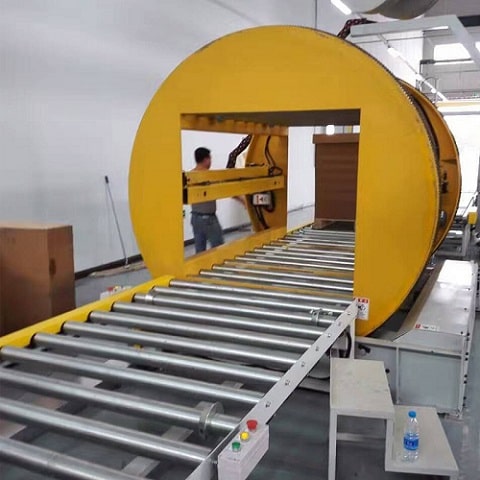
    Pass through structure for efficient pallet conveying and line flow. 
    Roller conveyors built on the chamber for relay transmission. 
    Fully automatic procedure and control system, reduce members needed.
    Features
    PLC control with automatic sensoring and operation program to achieve the high performance.
    Drum shape turn body with large chamber for efficient cargo pass through.
    Automatic conveying system deal with the cargo transferring, turn over......
    Machine's turn over motion driven by electrical motor with chain and sprocket.
    Top press platen to press the cargo keeping the items stable during rotation.
    Mushroom button, for stopping the machine completely if emergency happens.
    Low noise, create a better work environment for workers.
    Machine able to function in low temperature environment.
    Safety guard covers the working area, prevent aliens entering in.
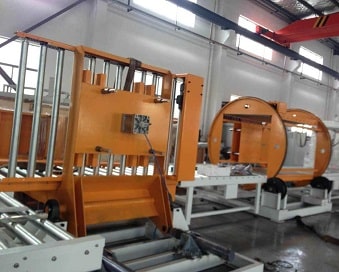
    online pallet inverter pallet changing line
    conveyorized pallet changer for online pallet flipping and changing
    O shape round body of the inline pallet changer exchanging pallets automatically
    Technical Parameter
    Pallet dimension Width 800mm*Height 1500mm / Width 1500mm*Height 800mm (customization is provided)
    Clamping range 1200-1500mm (customization is provided)
    Max load  
    FZ-PO-01 1 ton
    FZ-PO-02 2 tons
    FZ-PO-03 3 tons
    Speed of clamping around 5 seconds
    Speed of inverting around 45 seconds
    Power supply 380V, 3Ph, 50/60Hz( available to customize)
    Output 3.5kw
    Machine weight App 5000kg

    Key Features

    • PLC control with automatic sensing — the machine sequences clamping, turning and release on its own, so one operator can look after the whole section and every cycle runs the same way.
    • Drum-shape turn body with a large chamber — the round body carries bulky cargo through a full 180 degrees, including pallet loads and skids that would be awkward on a flat platform.
    • Roller conveyors built into the chamber — driven rollers relay the load in and out, so the unit keeps the line's flow instead of becoming a stopping point.
    • Chain-and-sprocket electric drive — the turning motion is motor driven through a chain and sprocket set, a simple mechanical drive that is easy to inspect during routine maintenance.
    • Quiet running — noise around the machine is kept low, which makes a real difference when the unit works in an aisle beside other production equipment.

    Specifications

    Machine typePass-through automated pallet inverter for inline installation
    Turn angle180°
    Standard pallet dimensions800 mm wide × 1500 mm high, or 1500 mm wide × 800 mm high
    Clamping timeApproximately 5 seconds
    Inverting timeApproximately 45 seconds
    Motor output3.5 kW

    Applications

    • After wrapping, before dispatch — the unit can sit downstream of a wrapping or packing station, so the pallet under a finished load is changed before the goods are labelled and moved out.
    • Paper mills and converters — paper piles arriving on skids can be turned and re-skidded without anyone handling the stack by hand.
    • Damaged pallet replacement — when the bottom pallet or slip sheet is broken, the load is turned over, the pallet is released and a sound one is put in its place before the load goes back on the line.
    • Skid-based production aisles — a stationary pallet inverter that stays in the conveyor run keeps heavy skids moving between stations instead of routing them to a separate inversion bay.
    • Lines that run continuously — because the load passes straight through, pallet changing happens inside the normal line cadence rather than as a separate stop with a forklift.

    Capacity Options

    Three builds cover most pallet and skid work: 1 tonne, 2 tonnes and 3 tonnes. The 1-tonne build suits lighter case, bag and paper loads on skids; step up to 2 tonnes when the same line also runs denser goods or heavier skids; the 3-tonne build is for the heaviest palletized loads you plan to move. Choose from the heaviest load the line will realistically run rather than the daily average, and treat capacity as separate from pallet size — the chamber is sized to your footprint, so a light load on a large pallet still needs the right chamber. Because we are pallet inverter manufacturers, the chamber and the drive build are matched to the load you run.

    Ordering & Delivery

    1. Tell us about the load first: the pallet or skid footprint, the load height and the heaviest weight your line will run. We use these figures to select the chamber size and capacity build.
    2. Then look at your line. Note where the pallet inverter will sit in the conveyor run, how the load arrives and leaves, and what equipment stands immediately before and after it, so the transfer points match what you already have.
    3. Check the conditions at the installation site — electrical supply, floor and working temperature — and let us know if anything there is out of the ordinary.
    4. Think about how you will run the machine: shifts per day, who operates it, and how much spare capacity you want for loads you may add later.
    5. Send those details to our team before production starts. As pallet inverter manufacturers, we build the chamber, conveyors and controls to suit each other and the line they join.
    6. Confirm unloading, placing the unit and commissioning with us before shipment, so the machine goes into your line without an unplanned shutdown.

    FAQ

    Can the chamber be built for a pallet or skid that is not a standard size?

    Yes — the body and the clamping range are made to order, so an unusual footprint is a matter of building the chamber to your drawing rather than choosing a different machine. As the team that builds the pallet inverter, we size the body from the loads you actually run. Send a sketch of the pallet or skid with the load on it and we will confirm the chamber and clamping figures before production starts.

    What keeps the machine safe while it is turning a load?

    A safety guard covers the working area, so there is no reach-in point while the body rotates, and a mushroom stop button halts the machine completely if anything unexpected happens. The operator works from outside the guarded zone, which keeps the turning sequence clear of anyone standing on the floor.

    Can it run in a cold room or an unheated warehouse?

    Yes. The machine is built to keep working in low-temperature environments, so chilled areas and unheated halls are as workable as a normal production room. If your site runs outside the usual indoor range, tell us the temperature at the installation point when you order so it can be checked against the build.

    How is the load held steady during the 180-degree turn?

    A top press platen presses down on the cargo inside the chamber before the body turns, which holds tall stacks, loose cases and layered paper in place through the rotation. The load also sits inside the turn body rather than on an open platform, so there is little chance of an edge catching or the stack shifting mid-turn.

    Does it need its own station in the plant, or does it join the line?

    It joins the line. The stationary pallet inverter is supplied conveyorized, with the transfer rollers and controls on the same frame, and it connects to the conveyor run on either side. Tell us the height of the conveyors at both tie-in points and the direction the load travels, so the transfers match your existing equipment.

    Will it take the pallets we already use?

    Wooden, plastic and presswood pallets all pass through the same way, because the machine clamps and contains the load rather than gripping one particular pallet design. What decides the fit is the width and height of the loaded pallet against the clamping range and chamber size, so check those two figures against what you run most often.