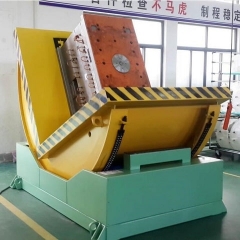
Mechanical mold and die flipper FZ-ME

Mechanical tipper for injection mold and die turnover, mechanical upender driven by mechanical motor. Easy maintenance and durable structure. A widely used flipping machine in mould industry.
  • Standard machine: No
  • Applicable for: Injection mold, mould, casting die, BOP valve bodies
  • Description
    For injection molds, usually require a turnover during the production. Our FZ-ME series mold flippers are designed for handling this task. 
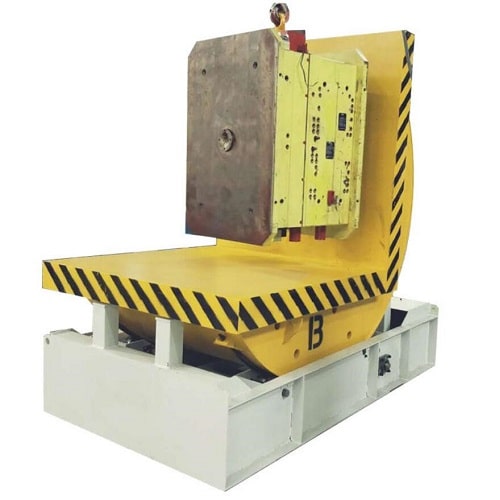
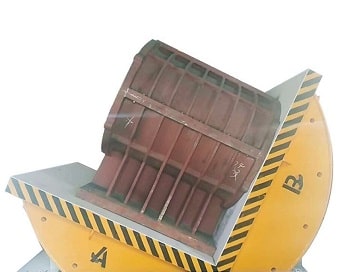
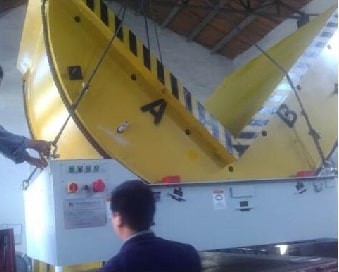
    injection mold flipper and tilter machine working with the hoist/crane together
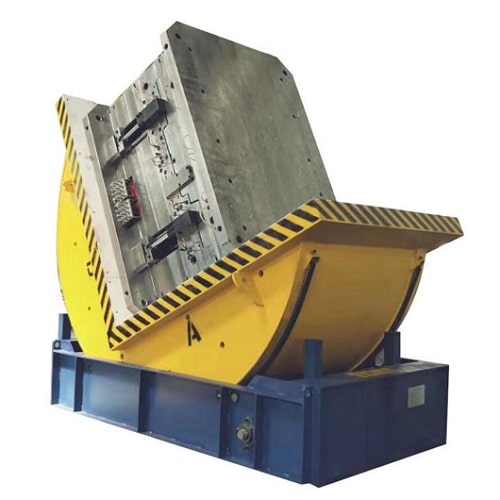
    The machine is built with steady structure and powerful driven system. Round turnover body, takes less space while well performing with good efficiency suitable for users with limited spaces.
    The rotation is driven by motor through gear box and chain connection, more efficient transmisson and reduces power consumption.
    Features
    90 degree mold flipping machine, mechanically driving system.
    A sliding table is optional, for better unloading purpose.....
    Optional to cover the platforms with nylon boards to extend the worklife of machine and reduce scratch.
    Available to install inside a pit which below the floor level, convenient to work with pallet jack and other equipments.
    Speed controlled through the frequency inverter and extend worklife of motor.
    Automatic stop when rotation is inplace.
    Displacement restrictors adopted to guarantee a safety operation.
    Smooth, accurate, vibration-free motion.
    Easy to operate and simple maintenance needed only few times a year.
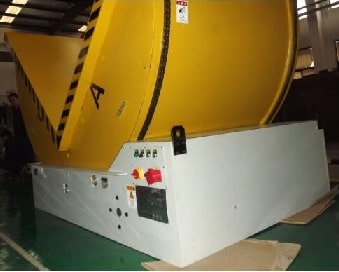
    electrical motor powered injection mold and casting die flipper machine
    mold and die flipping machine used to turnover BOP valve body
    casting die flipping machine and injection mold and mould tipper machine
    Technical Parameter
    Degree of tilting 90°
    Max load  
    FZ-ME-05 5 ton
    FZ-ME-10 10 ton
    FZ-ME-20 20 ton
    FZ-ME-30 30 ton
    Platform dimension depending on mold's dimension
    Turn over speed 50-80 sec/direction
    Operation mode button control
    Power supply 380V, 3Ph, 50/60Hz( 220V, 480V.... available to customize)


    Key Strengths

    • Mechanical drive, no hydraulics — there is no oil, no hose and no seal kit to manage, so the machine stays clean in a tool room and your maintenance team has less to look after.
    • Compact round body — the drum-shaped turnover body takes less floor space than a boxy frame, leaving room for lifting equipment to work above the machine.
    • Low maintenance demand — with no hydraulic circuit and few wearing parts, routine attention is measured in a few visits a year rather than a weekly schedule.
    • Steady under load — the platform and frame are built to hold a heavy mold firmly, so the tool does not rock or shift while the turn is in progress.
    • Sliding table option — if drawing a turned mold clear of the platform is awkward for your team, an optional sliding table lets the tool be moved out without extra lifting.

    Drive & Motion Control

    Turning speed on this mold flipper is set with a frequency inverter, so one machine can run a brisk standard turnover or slow the platform right down for a tall, top-heavy mold. Working the drive electronically also goes easier on the motor, which is how these units stay in service through years of production shifts. The operator works from a push-button panel — there is no pendant to misplace and nothing to program before a turn. Rotation stops automatically once the platform reaches the end of its stroke, and displacement restrictors keep the movement inside its intended range so the machine cannot be over-travelled. Motion through the turn is smooth and vibration-free, which matters when the faces inside a mold are polished or finely fitted.

    Specifications

    Tilting angle90°
    Max load versions5 t, 10 t, 20 t, 30 t
    Platform sizeMade to suit your mold dimensions
    Turnover time50–80 seconds per direction
    OperationPush-button control
    DriveElectric motor with gearbox and chain transmission
    Platform surfaceSteel platform with optional nylon boards
    InstallationFree-standing or recessed below floor level

    Shop Floor Applications

    • Injection molding halls — a mold comes out for inspection, cleaning or an insert change, and it can be turned next to the press instead of being carried across the plant to a crane bay.
    • Tool rooms and mold maintenance shops — the machine becomes the fixed station for splitting, cleaning and reassembling molds, so mold work moves to a repeatable setup instead of tying up a crane for every job.
    • Die casting and casting dies — heavier dies that need to be laid over for work on the cavity side.
    • BOP valve bodies and similar cast work — large castings that have to be upended for machining, inspection or finishing.
    • Mixed handling areas — where an industrial wrapping machine, a packing line or other handling equipment works the same aisle, the machine can be placed so that loading a mold does not block the route.

    Ordering Notes

    1. Weigh your heaviest mold, including any plate or fixture that travels with it, so we can match the 5 t, 10 t, 20 t or 30 t version of the mold flipper machine to the job.
    2. Send a sketch of the mold base and its overall height — platform dimensions are made to suit the mold, and the height tells us how much clearance the turn needs.
    3. Tell us how the mold will reach the platform, whether by crane, hoist or other equipment, so the platform height and the approach clearance suit the way you handle tooling.
    4. Confirm the supply on site before the machine is built — 380 V, 3-phase, 50/60 Hz is standard, and 220 V or 480 V can be arranged.
    5. Mention it if pallets also move through the same area. We also make pallet inverters, so we can advise on sharing access and clearance with the equipment you already run.
    6. Let us know if an industrial wrapping machine or a packing station works the same aisle, and we will suggest a position that keeps both operations moving.

    FAQ

    Which load version do I need — 5, 10, 20 or 30 tonnes?

    Match the machine to your heaviest mold, including any plate or fixture that travels with it. Small and medium tooling in a job shop usually sits well inside the 5 t or 10 t version, while plants running large injection molds or dies need the 20 t or 30 t platform. If your tool sizes vary widely, size the machine for the heaviest one and run lighter jobs on the same platform.

    Can it turn a tall, top-heavy mold safely?

    Yes. A tall or top-heavy mold is exactly the case the frequency inverter is there for: slow the turn down and the load stays steady through the whole arc. Set the mold centrally on the platform before you start, and make sure nothing is trapped under the tool.

    Can the machine be installed below floor level?

    It can be recessed into a pit so the platform sits at floor level. That keeps the machine out of the working aisle, makes it easier to feed, and saves headroom in a low building. Plan the pit with your builder before the floor work starts — depth and drainage are far easier to get right at that stage.

    What does routine maintenance actually involve?

    There is no hydraulic oil or filter schedule to follow. Plan on a handful of checks a year: chain condition, gearbox lubrication, the platform stops and the push-button panel, plus keeping the platform clear of chips and coolant. Operators can usually handle this between production runs.

    Can I protect polished mold faces during the turn?

    Yes — nylon boards can be fitted over the steel platform to reduce scratching and to take the wear instead of the platform itself. They are worth specifying if you routinely handle molds with polished cavities or fine locating faces. Mention it when the machine is ordered so the boards are included.

    How much space should I leave around the machine?

    The round turnover body keeps the machine compact, but leave clearance for the mold to swing through its turn and for your crane or hoist to approach from above. Keep the operator's position at the push-button panel clear of the swing area as well, so the person running the turn always has a free step back.