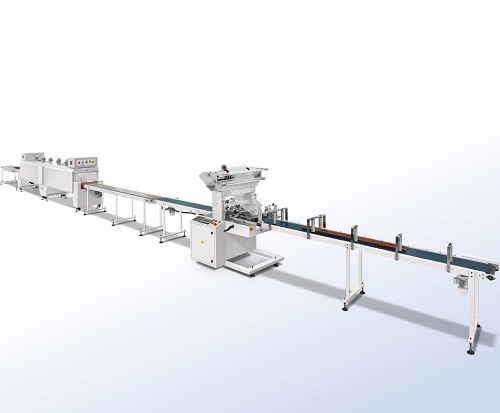
Back packing machine forms a bag and seals the plastic wrap on the back side. SW-B300 is built for products such as timber, rectangular tube, floor panel, bus bar, studs and aluminum profiles......
The machine is rewarded for it's fast speed and high standard performance. Back packing molds or forms are required, one machine is able to match with several different molds for different size package.
The package is fully sealed as one heat blade seals the ends before getting into the shrink tunnel.
Bottom lap sealing methods weld the joint area of the shrink film in the heat shrink tunnel.
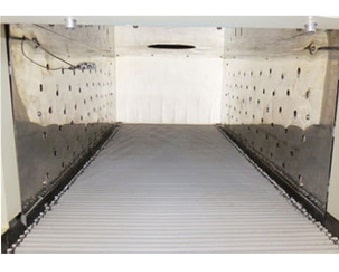
The heat tunnel used insultation to keep more heat inside, greatly reduce the electricity consumption.
Features
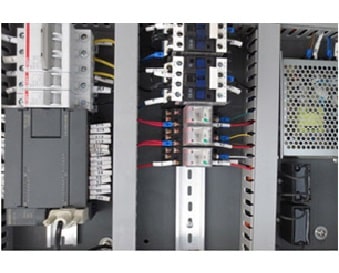
PLC program for machine control system.
HMI for setting re-adjusting and data input.
Converters for speed regulating, extending worklife of the motors.
Package formed by back packing molds.
One machine is able to match with several different molds for different sized products.
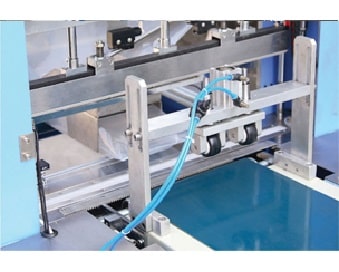
Heat blade for sealing the ends of package.
Full sides are sealed before shrinking, the package is packed without a leak.
Rollers of conveyor are made of silicion coated rods, able to resist high temperature.
Adopt worm gear reducer, no vibration during in-feeding and film feeding.
Special sealer is used, the sealing is secure and not easy to open. No sticking to the sealer due to Teflon coating.
Conveyor made of PE material, high anti-abrasion and high strength.
Strong wind cooling system, cool down the products instantly after heat shrinking.
Optional to add roller table next to the exit of shrink tunnel, prevent falling to floor.
Technical Parameter
| Sealing type |
bottom lap sealing |
| Power supply |
380V/50-60Hz/3phase |
| Product size |
width+height≤400mm |
| Sealing height |
≤200mm |
| Conveyor system |
straight conveyor |
| Packing capacity |
depends on product length |
| Film type |
polyethylene (PE) film |
| Max film size |
1000mm (width) x 280mm (outer diameter) |
| Power consumption |
max. 22kw |
| Tunnel oven size |
entrance 600(W) x 400(H) mm |
| Tunnel conveyor |
chains with silicon coated rods |
| Working height |
850-900mm |
| Air pressure |
≤0.5MPa(5 bar) |
| Sealing system |
Durable“U”shape alloyed sealing knife and saw teeth cutting knife with anti-stick Teflon coats |
| Operating panel |
Touch screen, PLC, omron temperature controller |
| Machine material |
carbon steel |
| Weight |
1200kg |
Bale Packing Overview
The SW-B300 is a bale shrink packing machine built for long, flat and linear goods: timber, floor panels, rectangular tube, bus bars, studs and aluminum profiles. It turns loose pieces into a tight, fully sealed bale, so goods leave the plant protected against dust and handling marks rather than taped or hand-wrapped. The machine is a natural fit at the end of a saw line, an extrusion run-out table or a panel finishing line, where wrapping has to keep up with production instead of becoming the slowest step. As an industrial shrink wrap machine for heavy and awkward lengths, it is designed to be loaded, set and left to run, with the operator supervising the line rather than wrapping every piece by hand.
Packing Cycle Steps
- The product travels along a straight conveyor, supported over its length so long profiles and panels stay level as they enter the machine.
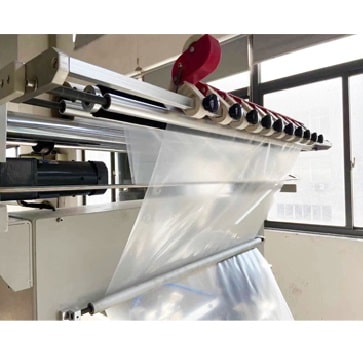
- Film wraps around the product and forms a bag on the back side. Because the bag is formed as the product moves, package length is not fixed on this shrink wrap machine, and long runs of profile or board pass through as single pieces.
- A heat blade seals the ends of the bag, so the package is fully closed before it reaches the tunnel.
- Inside the tunnel the bottom lap joint is welded and the film shrinks down onto the product.
- A strong wind cooling system brings the bale back to handling temperature as it leaves the tunnel, so it can be stacked or moved on straight away.
Machine Build & Hardware
- Speed regulation: on this heat shrink wrapping machine, converters control conveyor and film-feed speed, so the cycle can be matched to your line and the motors run at a steady pace instead of stop-start.
- Vibration-free feeding: a worm gear reducer keeps in-feeding and film feeding smooth, so the film sits square on the product before it is sealed.
- Abrasion-resistant conveyor: the PE conveyor surface has high anti-abrasion and high strength, which matters when heavy timber or metal sections run through it continuously.
- Non-stick sealing: the sealer is Teflon coated, so the seal is secure and the film does not stick to the sealing area between cycles.
- Heat-tolerant tunnel conveyor: the chains carry silicon-coated rods that resist the temperature inside the tunnel and keep the bale moving evenly.
Bottom Lap Sealing & Heat Tunnel
Sealing runs along the bottom overlapped area of the package. That joint is not simply pressed shut; it is welded as the bale passes through the heat shrink tunnel, which is why the package closes on all sides and holds together without a leak. A bale packed this way keeps dust and dirt away from the surface underneath, and because the joint sits underneath, printed faces, labels and stencils on the top and sides stay clear. The tunnel is insulated to hold heat inside instead of letting it escape into the workshop, which greatly reduces the electricity the machine draws. For a shrink wrap machine the tunnel is also where the bale gets its finished look: the film draws down tight around corners and edges, so timber and profiles arrive wrapped flat rather than loose.
Applications
- Timber and wood posts: sawmills bale posts, battens and planks so yard stacks stay square and the ends are sealed against dust and handling marks.
- Floor panels and boards: panel producers wrap floor boards in bundles, sealing the edges so they do not chip while being moved.
- Aluminum profiles: extrusion plants wrap long profiles straight off the run-out table, keeping the mill or coated finish clear of scuffs.
- Rectangular tube and metal sections: tube mills and metal stockists bale rectangular tube and similar sections for storage and delivery.
- Bus bars and studs: fastener and electrical manufacturers pack heavy linear items into sealed bales instead of open bundles that shed small parts.
Order Planning
- Tell us the widest, tallest and heaviest product you plan to pack, along with the tallest seal you need. Those figures decide what the machine has to close around and the tooling that comes with it.
- Share how your plant is supplied, including the power available and the air line you can run to the machine, so it is set up for your site rather than a generic specification.
- Confirm the film you intend to buy, since the roll holder has a set capacity and it is worth checking your film supply against it.
- Explain how the finished bale leaves the machine, whether it is stacked, loaded onto a stillage or taken straight to a truck bed, so the outfeed end of the line can be planned with you.
- Agree installation, start-up and handover arrangements before dispatch. We build shrink wrapping machines ourselves, so the machine is planned with your team from the order through to the first production run.
FAQ
How many bales can the machine pack in an hour?
There is no single figure, because packing capacity depends on product length. Short studs cycle quickly, while long aluminum profiles or floor boards take longer per piece. Send us the product mix and running pattern you expect, and we can work out what this shrink packaging machine will do in your line.
How does the operator control the machine?
Everything runs from a touch screen panel with a PLC, and an Omron temperature controller manages the tunnel heat. The operator uses the screen to set and re-adjust the wrapping parameters and to enter data, so a repeat job can be set up the same way each time. On this heat shrink wrapping machine the controls are the operator's main contact point, arranged so switching shifts does not mean re-learning the settings.
Will it fit the end of our existing line?
The machine runs as a straight through-line, and its working height of 850–900 mm lines up with most run-out tables and conveyors. Tell us your infeed and outfeed layout and the room you have available, and we will confirm how this industrial shrink wrap machine sits in your plant.
What stops long panels dropping as they leave the tunnel?
A roller table can be fitted at the exit of the shrink tunnel so long pieces stay supported instead of tipping or falling to the floor. It is an optional addition, so mention the product lengths you run when the line is planned and we will confirm whether it is worth fitting for your work.
Do we need a separate machine for every product size?
No. The package is formed by a back packing mold, and one machine can be matched with several different molds for different sized products. Many plants keep a mold for each bale size they run and change molds when they change product, so a single machine covers a family of sizes.
How is this different from a side-sealing shrink wrapper?
A side-sealing wrapper joins the film at the side of the package as the product travels across the belt, which suits boxed goods and boards moving crosswise. This bale machine forms the bag on the back side and welds the joint underneath, so long timber, tube and profiles can feed lengthwise through the line. We build both types ourselves and can advise on which suits your product.