Steel coil upender and tilter FZ-CT

Coil up ender machines also named coil tipper for tilting steel coil, aluminum coil and cord wire spool 90 degrees to your ideal direction for annealing or loading on a decoiler to work with forming machines.
  • Standard machine: No
  • Applicable for: Steel coils, wire spool, aluminum rolls...
  • Description
    FZ-CT series inverters are turnover machineries for coil shape products, such as jumbo paper rolls, steel coils, aluminum coils, wire spools, reels and cord spools......
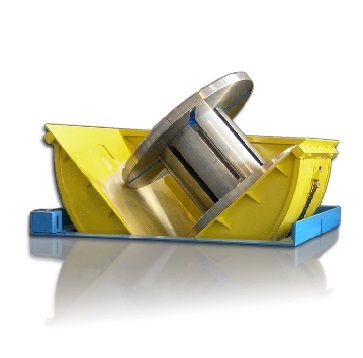
    coil upender for wire spool
    These products are heavy to up end, but necessary to turnover in some situations. For instance, steel straps are stacked and loaded on wooden pallets and need to change to vertical position before loaded on decoiler for studs and profile forming.
    Sometimes, steel coils need to invert for placing a convector underneath before entering into the furnace to anneal or temper.
    Features
    90 degree upender, for coil related products.
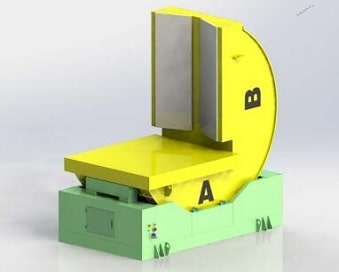
    V saddle for better fixing the coils steadily.
    A cutout is optional for placing the pallet and make the position more centralized.
    Surface is optional to cover with a layer of nylon boards for protect the products and reduce damages to the machine.
    Supportive rollers for bearing the heavy load, make the rotation safe and stable.
    Micrometric setting device make supportive rollers adjustable, ensure the machine runs smoothly.
    Oblique gear and worm speed reducer with chain mechanism for driven the machine efficiently.
    Speed is controlled by frequency inverter, easy to adjust and protect the motor.
    Electric and Mechanical displacement restrictors adopted to guarantee a safety operation.
    Position locking function allowing machine stop at any angle.
    Automatically position fixing when power off for safety operation.
    Individual electrical control panel away from the machine, more safe for users.
    Simple control mode, no need for training.
    Strong and durable structure, easy maintenance.
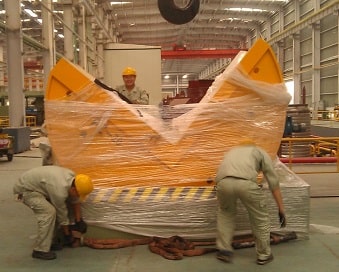
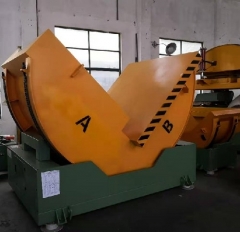
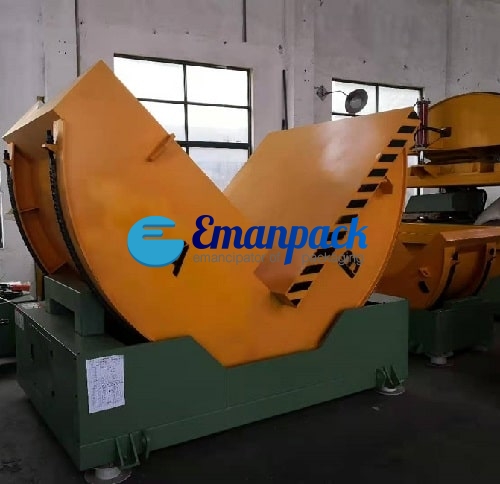
    30 tons steel coil upender machine
    coil downender machine used to upend heavy steel coils and rolls
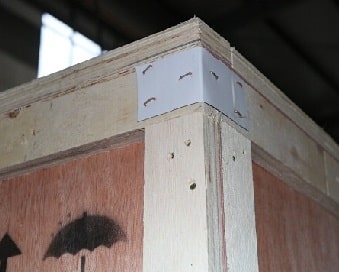
    wooden crate packaging the coil upender and reel turnover machine
    Technical Parameter
    Degree of tilting 90°
    Max load  
    FZ-CT-05 5tons
    FZ-CT-10 10tons
    FZ-CT-20 20tons
    FZ-CT-30 30tons
    Platform dimension upon product's dimension
    Turn over speed 20-50 sec/direction
    Operation mode button control
    Power supply 380V, 3Ph, 50/60Hz( 220V, 480V.... available to customize)
    Noise level ≤75DB
    Work environment humidity≤98%,temperature-10-40℃
    Optional Accessories
    Remote control
    one forklift driver is enough to manage the work


    Key Features

    • V saddle cradle — the load sits in a V-shaped seat that centres round coils, spools and reels and stops them rolling as the platform turns; different diameters share the same saddle without a changeover.
    • Roller-supported rotation — the weight of the coil rides on supportive rollers built to bear heavy loads, which keeps the turn steady instead of top-heavy; a micrometric setting device adjusts the rollers so the platform runs level and smooth.
    • Geared drive — an oblique gear and worm speed reducer turns the platform through a chain mechanism, a combination chosen for heavy, repeated tilting rather than for speed.
    • No slings across the coil — the load rests on the platform through the whole turn, so there is no chain or sling pressing on the wind and nothing has to be rigged before the coil moves.
    • Built for daily workshop use — a strong, durable structure with easy access for maintenance, so routine checks stay short and the machine keeps working shift after shift.

    Specifications

    ParameterSpecification
    Tilting angle90°
    Model rangeFZ-CT-05, FZ-CT-10, FZ-CT-20 and FZ-CT-30
    Maximum load5 t, 10 t, 20 t or 30 t
    Platform dimensionsBuilt to suit the coil, spool or reel
    Load seatingV saddle cradle; cutout available for palletised coils
    Platform surfaceOptional nylon board layer to protect the load
    Turning speed20-50 seconds per direction
    Working humidityUp to 98%
    Working temperature-10 °C to 40 °C
    Optional accessoryRemote control

    Controls & Safety

    • Position locking — the platform holds at any angle the operator stops it at, so a coil can pause in line with a decoiler, a strapping station or a furnace charge.
    • Safe if the power drops — cut the supply mid-tilt and the machine fixes its position automatically instead of letting a loaded platform drift.
    • Travel limits both ways — electric and mechanical displacement restrictors end the stroke at the top of the 90° turn, so every cycle finishes in the same place.
    • Controls away from the load — the electrical control panel is a separate unit mounted clear of the frame, and push-button operation needs no special training.
    • Gentle start and finish — a frequency inverter drives the turning speed, easing the load into motion and letting the operator slow the last few degrees before the coil settles.

    Applications

    Wound loads change direction on this machine at several points in a coil handling line. Coils stacked and strapped on wooden pallets often have to stand vertical before they are loaded onto a decoiler for studs and profile forming. In annealing and tempering, a coil is turned so a convector can be placed underneath before the charge enters the furnace. Aluminum processors use the same 90° movement to prepare coil for slitting and packing. Wire and cable plants upend wire spools and cord spools that arrive lying flat, and paper mills stand jumbo paper rolls and reels upright for unwinding. In a packing area the upender often stands just before an industrial wrapping machine or a strapping station, so the coil leaves the platform ready for the next operation. Each of these jobs asks one thing of the machine: a controlled turn, with no rigging and no hand-rolling of a heavy load.

    Running & Maintenance

    1. Start with a walk-round. Before the first tilt of a shift, check that the V saddle and the roller faces are clean and free of metal chips, strapping offcuts or grit that could mark a coil.
    2. Check the contact surfaces. Inspect the faces that touch the coil for deep scoring or embedded chips, and replace worn parts before they start marking aluminum or polished stock.
    3. Keep the drive lubricated. Follow the lubrication schedule supplied with the machine for the chain mechanism and the worm speed reducer; a heavy coil is unforgiving of a dry chain.
    4. Listen for changes. If the note of the drive changes or the platform hesitates at the start of a tilt, take the machine out of service and have it checked before the next coil.
    5. Record anything unusual. Note a hesitation, a new noise or a mark left on a coil, and pass it to your maintenance team; small changes on a turnover machine are easier to fix before they affect a load.

    FAQ

    Which coils, spools and rolls can the machine handle?

    The steel coil upender handles steel coils and aluminum coils, wire spools, cord spools, reels and jumbo paper rolls. All of them ride on the same platform, with the saddle and platform built around the diameter and winding width you work with most. If you handle several load types, tell us the heaviest and the widest so we can check they share one platform.

    What measurements do you need to build the platform?

    Four figures: the outside diameter of the coil, the winding width (or the face of the spool), the weight of the load, and whether a wooden pallet travels with the coil. Platform dimensions are built around your product rather than taken from a fixed list, so the platform, saddle and rollers are sized from those numbers.

    Which load class should we order?

    Match the class to the heaviest coil you handle rather than to the average load. A mixed workload always sends the heaviest coil to the upender sooner or later, and the machine has to carry that one safely every time. Send us your typical and maximum coil weights and we will confirm which class fits.

    What power supply does the machine need?

    The standard build runs on 380 V, three-phase, 50 or 60 Hz. Machines can also be built for 220 V or 480 V supplies, so tell us the voltage and frequency your plant uses when you enquire and the machine is configured to match.

    Can it lay a coil down as well as stand one up?

    Yes. The platform tilts through 90° in both directions, so the same machine works as an upender and as a downender. A coil that arrives standing can be laid flat for storage, and a coil lying flat can be stood on edge for a decoiler or a furnace charge. The saddle carries the load the same way in either direction.

    How much clearance should be left around the machine?

    Allow for the platform's full 90° swing at both the loading and the discharge end, plus space for a forklift or crane to bring the coil in and take it away. Keep the control panel within sight of the load and leave the floor inside the machine's travel free. Send us a plan of your bay and we will check the footprint against it.