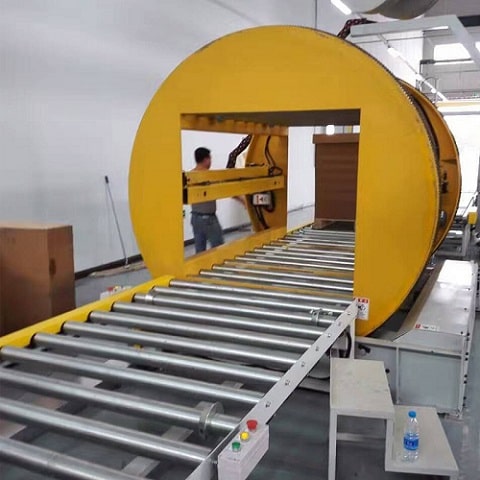
Emanpack

Pallet Inverter Models & Sourcing Routes

Pallet Inverter Models & Sourcing Routes

Comparing a pallet inverter manufacturer with a pallet inverter supplier comes down to five model families: the fork type electric mobile rotator, the 180° turnover machine, the floor level flipper, the C shape inverter and exchanger, and the automatic inline model — each one configured around your pallet size, load and exchange point.

5 model families FZ-PM · FZ-PT · FZ-PF · FZ-PC · FZ-PO
90° and 180° turnover Including the 90° changer used in frozen food
Quote by inquiry No online checkout — specifications confirmed per job
Fork type electric mobile pallet rotator FZ-PM

Manufacturer or supplier: what the difference means for your project

A pallet inverter manufacturer builds and configures the machine; a supplier sources it. That difference shows up in customisation scope, in lead time, and in who answers when a drawing revision or a spare part is needed long after the pallet changer has been installed.

Manufacturer

  • The machine is configured against your pallet size and load at the build stage, not adapted afterwards.
  • Technical questions reach the people who design the turnover mechanism and the frame.
  • Spare parts and service route back to the same production site that built the unit.

Supplier or distributor

  • Usually offers several brands, so model choice may be wider but deeper specification detail is thinner.
  • Lead time depends on their stock position and on their own upstream factory schedule.
  • Support and parts follow whatever agreement they hold with the original maker.

The five-model pallet inverter range at a glance

Every family in the range solves the same core problem — goods loaded on a wooden pallet are damaged at the bottom, and moving all goods to change the bottom pallet is heavy manual work. The models differ in how and where the turnover happens.

Model Product name What it does in a pallet-exchange job
FZ-PM Fork type electric mobile pallet rotator A mobile, fork-mounted electric rotator — the turnover can be taken to the pallet rather than the pallet being brought to a fixed station.
FZ-PT 180 degree pallet inverter Flips the pallet and the goods through 180°, the move used to change a damaged pallet or damaged bottom products and then set the load down on a sound pallet.
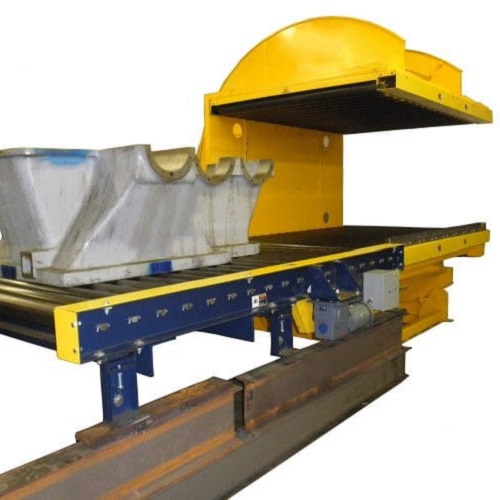
FZ-PF Floor level pallet flipper machine A floor level flipper — the pallet is handled at floor level at a fixed exchange position.
FZ-PC C shape pallet inverter and exchangers Inversion and pallet exchange combined in a C-frame build; the frame opening is matched to your load footprint and pallet size at configuration.
FZ-PO Automatic inline pallet inverter machine Pallet exchange inside a running line rather than at a standalone station, for operations that cannot break the production flow.

Load capacity, machine dimensions and power requirements are not listed on the range page — they are confirmed per model and per configuration once your pallet size, load weight and exchange point are known.

Where each model fits on your floor

The model code you end up specifying usually follows one practical question: where does the load actually get turned, and who is standing next to it when it happens.

180 degree pallet inverter FZ-PT
FZ-PT

180 degree pallet inverter

The turnover workhorse: palm the pallet and goods through 180° and the damaged pallet, or the damaged products underneath, can be swapped without restacking the load by hand.

Choose it whenBottom damage on the pallet is the recurring cost, and the load has to come off the old pallet and back onto a sound one in a single turnover.

See FZ-PT in the range
Floor level pallet flipper machine FZ-PF
FZ-PF

Floor level pallet flipper machine

A floor level design that keeps the exchange position at ground level instead of raising the load onto a platform or an elevated line.

Choose it whenThe exchange point in the bay is a floor-level position, and operators should not be lifting or presenting pallets at height.

See FZ-PF in the range
C shape pallet inverter and exchangers FZ-PC
FZ-PC

C shape pallet inverter and exchangers

A C-frame inverter and exchanger combination, offered as one family so that inversion and pallet exchange are handled by the same unit.

Choose it whenYou want inversion and exchange in one machine and your load footprint and pallet size need to be checked against the C-frame opening before the order is placed.

See FZ-PC in the range
Automatic inline pallet inverter machine FZ-PO
FZ-PO

Automatic inline pallet inverter machine

The automatic inline member of the range, positioned inside a production or packing flow rather than at a separate exchange station.

Choose it whenPallet exchange has to happen without pulling loads out of the line — bring the conveyor interface, available floor space and line speed to the quote conversation.

See FZ-PO in the range

Match the scenario to the machine

Start from what is going wrong in the bay, not from the model list. Each scenario below points to a family in the range and to the single question that decides the configuration.

Frozen cartons stuck to freezer spacers

The 90° pallet changer is commonly used in the frozen food industry: it tilts the pallet 90° to give the operator space to change the pallet, and the turnover action also shakes the frozen cartons so freezer spacers come away easily.

Ask forA 90° changer configuration rather than a 180° turnover machine.

Pallets breaking down at the bottom

Products loaded on a wooden pallet get damaged at the bottom, and shifting every carton by hand to reach the broken pallet is heavy work.

Ask forThe FZ-PT 180 degree pallet inverter, which flips pallet and goods together.

Exchange point fixed at floor level

The bay has no platform and no raised conveyor, so pallets are presented and taken away at ground level.

Ask forThe FZ-PF floor level pallet flipper machine.

Exchange inside a running line

Pulling loads out of the flow to change a pallet costs more than the pallet itself.

Ask forThe FZ-PO automatic inline pallet inverter machine and its interface requirements.

Four sourcing routes, and what to confirm with each

The same five models can reach you through very different commercial arrangements. Use the table as a checklist of questions, not as a ranking.

Route What you are buying Confirm before you commit
Factory-direct The machine built and configured to your pallet and load by the people who make it. Who signs off the configuration drawing, and where spare parts will be sourced from.
Trading company Access to several brands through one commercial contact and one set of export documents. Which factory actually builds the unit, and whether the technical specification is passed through unchanged.
Regional distributor Local stock, local commissioning and a short physical distance for service. Whether the model offered is the same family you specified, and what local stock of wear parts exists.
System integrator The inverter as one element of a wider pallet-handling or packing line. The line interface details — conveyor height, control signals and cycle handover — written into the scope.

From load details to a quoted price in four steps

A pallet inverter quote is only as accurate as the brief behind it. These four steps keep the back-and-forth short.

1

Define the load and the pallet

Load weight, load height, pallet size and pallet condition. Because the range page lists no capacity figures, this is the information that decides which model can be offered at all.

2

Decide 90° or 180°

90° if the job is frozen food with spacers or an operator needs space to swap a pallet; 180° if the load itself has to be turned over onto a sound pallet.

3

Pick mobile, floor level or inline

FZ-PM for a mobile rotator, FZ-PF for a floor level station, FZ-PC for a C-frame inverter and exchanger, FZ-PO for automatic inline exchange.

4

Send the brief for pricing

Add the destination port and your required delivery window. The machine is quoted against the configuration, not sold from an online cart.

What goes into a quote brief

The six-line brief that gets an accurate price

  • Load weight and load height, plus what the goods are (cartons, bags, drums, frozen product).
  • Pallet type and dimensions — wooden pallet size, and whether the pallets are damaged or sound.
  • Turnover required: 90° tilt or a full 180° flip.
  • Exchange point: mobile unit, floor-level station, C-frame unit or inline installation.
  • Throughput per shift and whether the machine runs beside an operator or inside a line.
  • Destination port and required delivery window.

Request a quote

Send the brief through the Contact Us page, or use the Leave a message form on the site — it asks for your name, your e-mail and your question, and it is the route to a priced configuration.

Review the models first

Send your load details and get a configured quote

Tell us the pallet size, load weight, turnover angle and exchange point, and the five-model range narrows to the one machine that fits your bay.

Related Reading

Three notes to help clarify product requirements before contacting the supplier.

How to Choose a Pallet Inverter Manufacturer for trade Projects

How to Choose a Pallet Inverter Manufacturer for trade Projects

Read article

Preparing a Warehouse Pallet Exchange Project for Supplier Quotes

Preparing a Warehouse Pallet Exchange Project for Supplier Quotes

Read article

Automatic Inline Pallet Inverters in Production Line Planning

Automatic Inline Pallet Inverters in Production Line Planning

Read article

Frequently Asked Questions

what does the fz-pt 180 degree pallet inverter do?

the fz-pt flips the pallet and its goods through 180 degrees. that lets an operator change a damaged pallet, or damaged products underneath, without restacking the entire load by hand.

when is the 90 degree pallet changer the better choice?

the 90 degree pallet changer is commonly used in the frozen food industry. it tilts the pallet 90 degrees to give the operator room to change the pallet, and the turnover action can also shake frozen cartons so freezer spacers come away more easily.

how does a pallet inverter help with bottom damage on wooden pallets?

products loaded on a wooden pallet can be damaged at the bottom, and moving every carton to change the pallet is heavy work. a pallet inverter turns the pallet and goods over so the damaged pallet or bottom products can be replaced more directly.

what is the fz-po automatic inline pallet inverter designed for?

the fz-po is the automatic inline model in the range. it is intended for pallet exchange inside a running production or packing line rather than at a separate manual station, so line interface details should be confirmed during quotation.

what is the fz-pc c shape pallet inverter and exchanger?

the fz-pc is a c shape pallet inverter and exchanger in the five-model range. it combines inversion and pallet exchange within a c frame design, with the exact configuration checked against the pallet and load requirements before order.

what details should i include when requesting a pallet inverter quote?

include the load weight and height, pallet type and dimensions, required turnover angle such as 90 or 180 degrees, the exchange point, throughput per shift, destination port and required delivery window. the range page does not publish load capacity or power ratings, so these details are confirmed for the selected model during quotation.